Blog
7th Edition Climate Action Plan Report Card
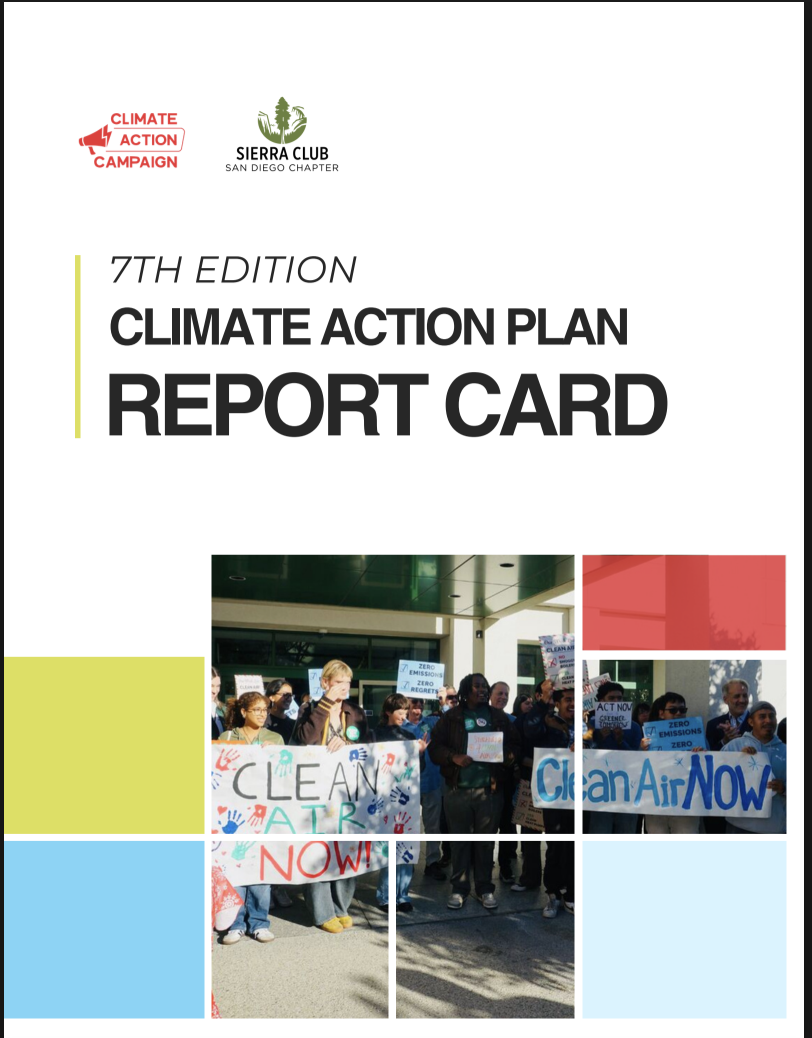
Our communities are now facing a dangerous new normal: devastating floods, wildfires, eroding coastlines, blistering heat, and a cost-of-living crisis.
San Diego just endured its hottest stretch on record. In September, a punishing heat wave pushed parts of the county to 112 degrees, shattering a 133-year-old record. At the same time, San Diego Gas and Electric (SDG&E) logged 30 unplanned power outages in 24 hours as statewide electricity demand hit its highest level of the year, leaving thousands of customers in the dark. The county's own public health data confirms that heat waves are growing longer and more frequent — and that communities with the least access to air conditioning suffer the highest rates of heat-related hospitalizations.
In January 2024, floods displaced over 1,200 San Diegans from their homes. Many families have yet to recover fully, and a high-intensity, rapidly strengthening El Niño is forecasted to bring the next round this winter. The city's infrastructure funding gap has climbed to nearly $8 billion over five years, driven largely by failing stormwater systems. Neighboring Los Angeles County offered a preview of what's at stake: in January 2025, it experienced the most destructive wildfire in its history, killing 28 people and destroying 16,000 structures. In Carlsbad, an unstable coastal bluff forced the city to declare a local emergency and close a stretch of Carlsbad Boulevard in September, as rising seas and worsening storms continue to erode the region's coastline.